HISTORY
OUR LADY OF THE SOCAVÓN
The Virgin of the Socavón – Oruro, Bolivia
The Virgin of the Socavón is one of the most revered Marian devotions in Bolivia and stands as the spiritual heart of the city of Oruro. She is recognized as the Patroness of Oruro and of miners, and her veneration represents a profound fusion of faith, history, and cultural identity that has endured for centuries.
Historical Origins
The origins of the devotion date back to the Spanish colonial period, when Catholic missionaries introduced the worship of the Virgin of the Candelaria to the Andean region during the 16th century. As Oruro developed into an important mining center, the Virgin gradually became closely associated with the lives, hardships, and hopes of miners who worked in the region’s dangerous underground tunnels, known as socavones.
Over time, the Virgin of the Candelaria came to be locally venerated as the Virgin of the Socavón, reflecting both her physical location near the mines and her spiritual role as protector of those who labored within them.
The Carnival of Oruro
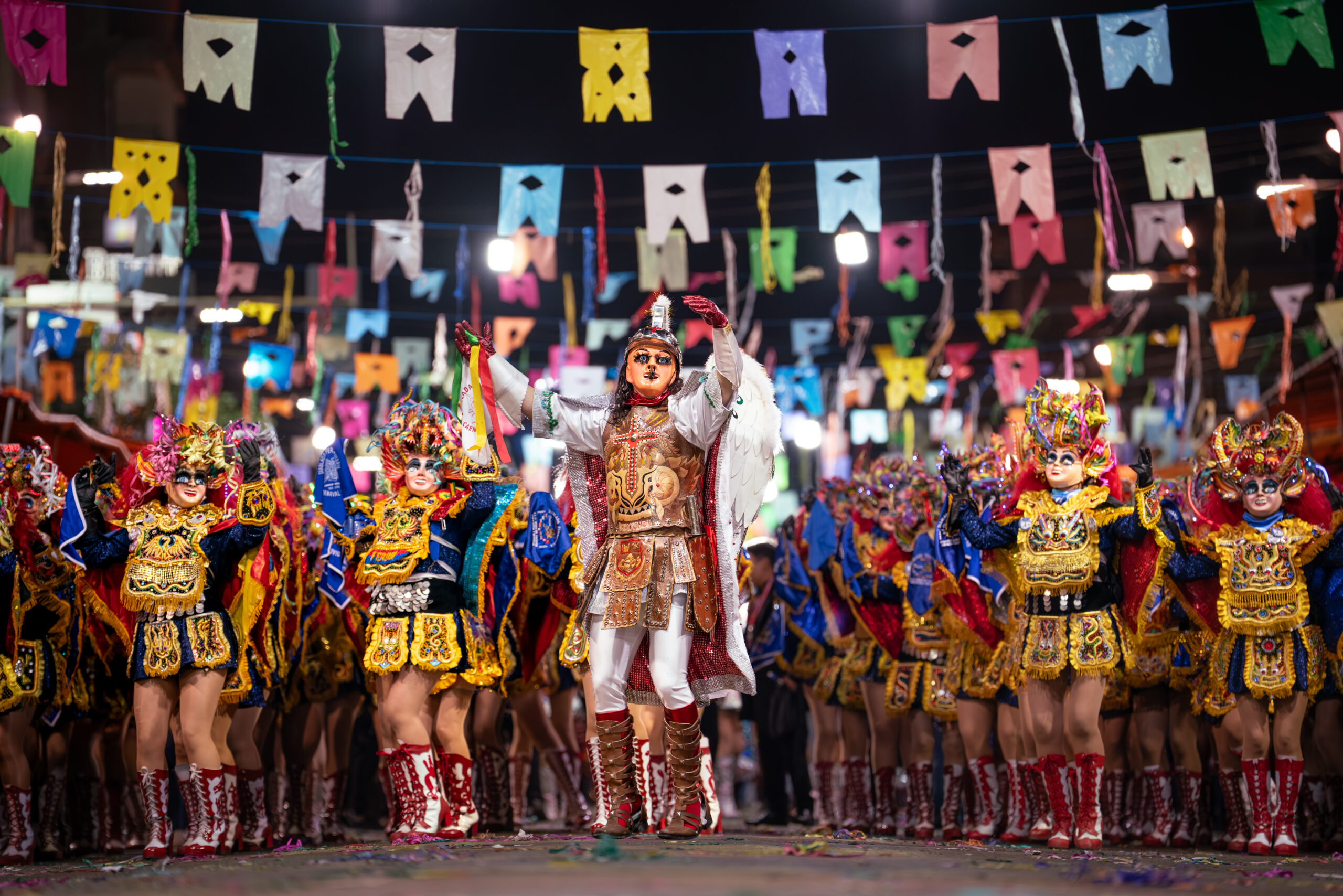
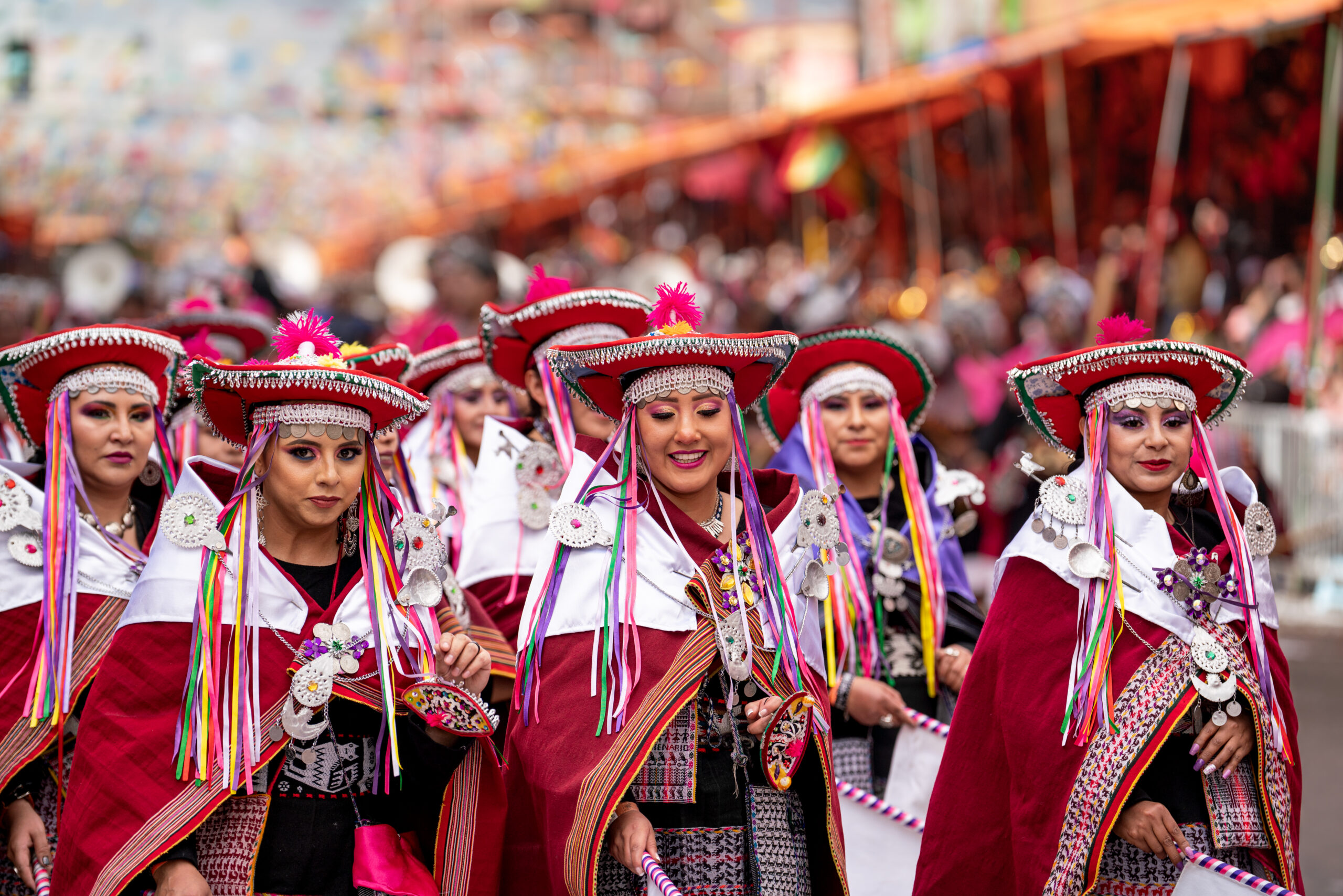
The most visible and internationally recognized expression of devotion to the Virgin of the Socavón takes place during the Carnival of Oruro, celebrated annually on the Saturday before Ash Wednesday. The Carnival is not merely a festivity, but a religious pilgrimage expressed through dance.
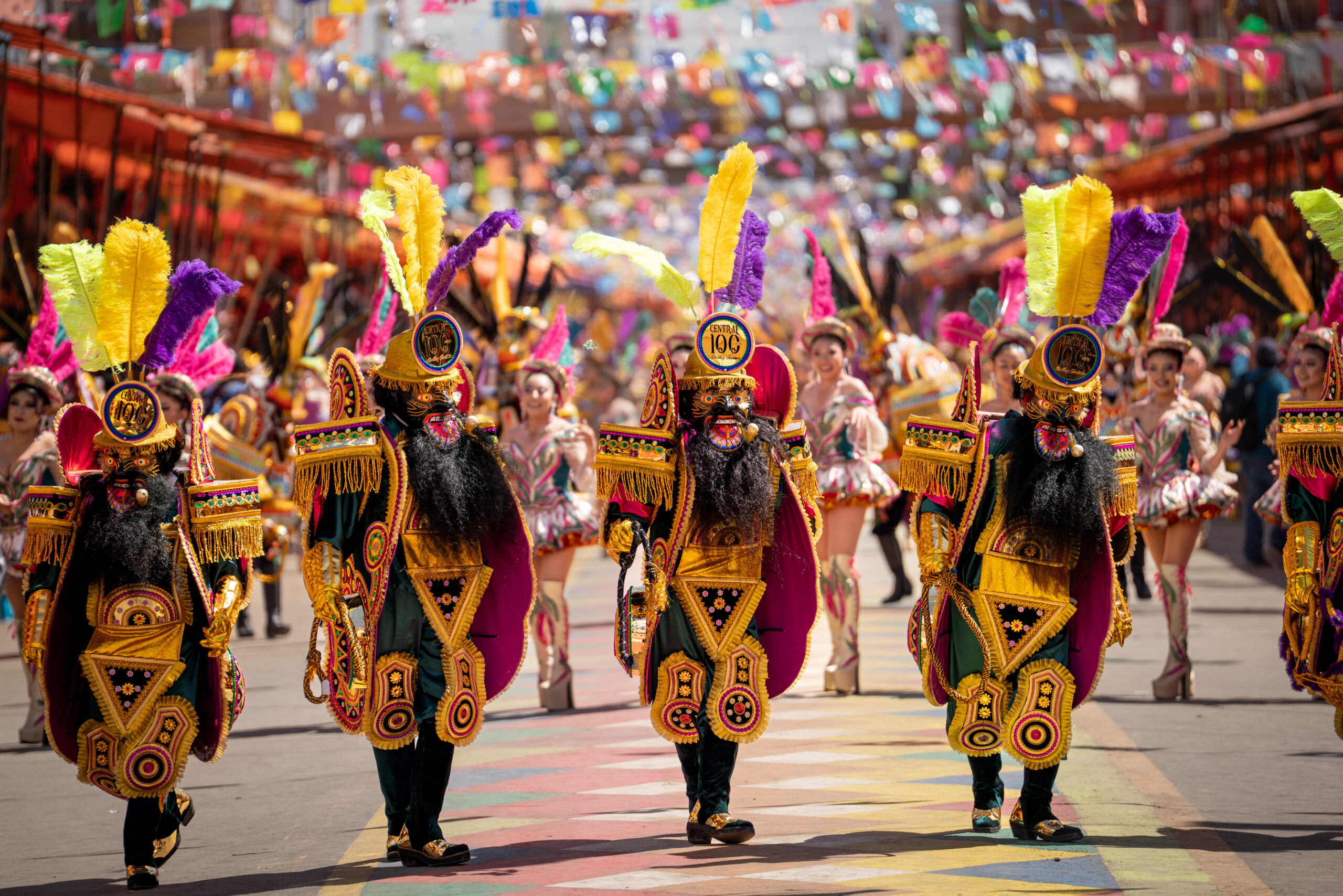
Thousands of dancers and musicians participate in a long procession, performing traditional dances such as the Diablada, Morenada, Caporales, and others, all as an act of faith and promise to the Virgin. At the conclusion of the procession, participants enter the sanctuary, many on their knees, to pay homage to the Virgin of the Socavón.
In recognition of its cultural and spiritual significance, the Carnival of Oruro was proclaimed a Masterpiece of the Oral and Intangible Heritage of Humanity by UNESCO in 2001, with the Virgin of the Socavón as its central spiritual figure.
Spiritual and Cultural Significance
Today, the Virgin of the Socavón stands as a powerful symbol of faith, protection, and cultural identity. Her devotion transcends religious practice, uniting history, folklore, and living tradition. She represents the resilience of the people of Oruro and the enduring bond between spirituality and cultural expression in Bolivia.
Popular Tradition and Devotion
According to popular tradition, the devotion was firmly established in the late 18th century through a legendary event involving a repentant bandit known as Nina-Nina, who sought refuge near the mines of Oruro. After his death, an image of the Virgin was discovered painted on a wall inside a socavón. This event was interpreted as a divine sign, leading to the construction of a sanctuary at that very site.
The original image of the Virgin, preserved on a wall of the sanctuary, remains a powerful symbol of faith and continuity. Over the years, the temple evolved into what is now the Sanctuary of the Virgin of the Socavón, an important pilgrimage site that receives thousands of devotees annually.
The Virgin and the Miners
The Virgin of the Socavón holds a unique place in Bolivian religious life due to her deep connection with mining culture. Miners have traditionally entrusted their lives to her protection, praying for safety, strength, and prosperity before entering the mines. This devotion reflects the broader Andean worldview, where spiritual belief and daily labor are inseparably linked.